Pregnancy, Babies & Chemicals
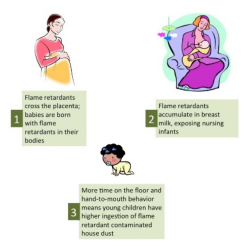
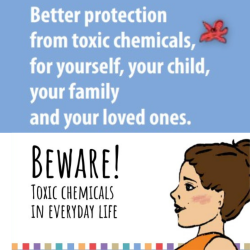
A useful leaflet has been released by WECF (Woman Engage For A Common Future) who are campaigning against Endocrine Disrupting Chemicals (also called ‘hormone disruptors’).


Every night, millions of children and adults sleep on mattresses treated with a class of chemicals that was long ago banned from sheepdips and pesticides. Every day, we sit on furniture containing the same toxic compounds, absorbing them through our lungs and skin. According to parliament’s environmental audit committee (EAC), mothers in the UK and the US have the world’s highest recorded concentrations of a toxic class of flame retardants in their breastmilk. Banned fire retardants have recently been discovered in umbilical cord blood. We have no clear idea of how they might affect the development and future health of foetuses. But we know that they are persistent, accumulative and associated with cancer and disruption of the hormonal and reproductive systems.
There are so many articles available about the negative impact of fire retardant chemicals on human health and the environment. A simple google search will bring up a whole host of articles, many of which focus on the US legal battles with the chemical companies.
Please find below links to the most recent research into the effect of flame retardants on children's health.
Should I be concerned about fire retardants in my child’s mattress? Yes. Children are vulnerable to the toxic effects of these chemicals because their brain and other organs are still developing. Researchers have found that children have higher concentrations of flame retardants in their bodies than adults.
There is a lot of information out there about fire retardants, but we've created a list of the top 20 things we believe you should know.
Science Daily have just published a new article about the use of “new” flame retardants. The old chemicals (PBDEs) have been swapped out with organophosphate flame retardants in many products, but they have proven to be just as dangerous. “It’s disheartening that after years of health harm to our children from PBDE flame retardants, the most widely used replacements appear to be just as bad,” said Dr. Arlene Blum, Executive Director of the Green Science Policy Institute. “To protect future generations, manufacturers can and must stop the cycle of toxic... Read More
Government accused of stalling on action to reduce exposure to toxic chemicals in homes The Parliamentary Environmental Audit Committee has published its report on Toxic Chemicals in Everyday Life today, setting out the growing problem of chemical pollution and a range of measures the Government should act upon with key recommendations.
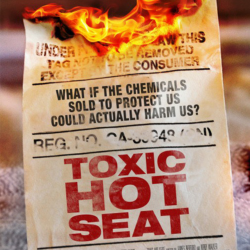
The award-winning 2012 Chicago Tribune investigative ‘Playing With Fire’ Toxic Hot Seat threads together an intricate story of manipulation that details how Big Tobacco skilfully convinced fire safety officials to back a standard that, in effect, requires all furniture to be filled with toxic flame retardants.
MP Mary Creagh is the chair of a parliamentary inquiry into toxic chemicals in the home with growing concerns about the use of flame retardants in mattresses and sofas. She has recently released a podcast on the subject titled "Emergency on Planet Earth", which you can hear below.